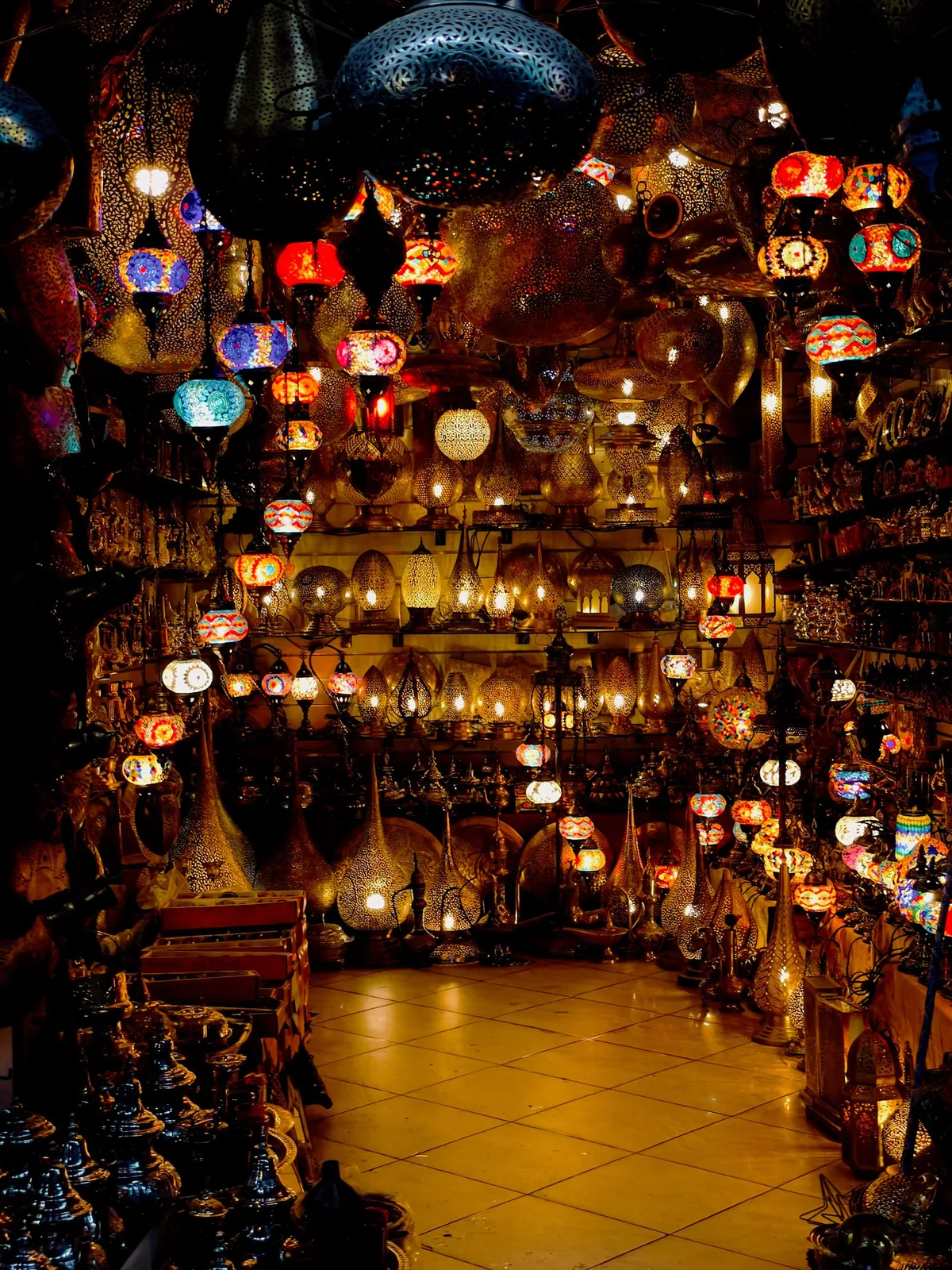
A night in Marrakech has a shape to it, and learning that shape is half the pleasure. It begins on a rooftop with the light going gold over the Koutoubia, moves down into the medina for a long dinner, and — if you have the appetite — ends somewhere with music and a low ceiling, long after the call to prayer has faded for the night.
The sundowner is not optional. This is a city built to be watched from above, and the ritual of climbing to a terrace as the muezzin sounds and the Atlas turns pink behind the minarets is the single most Marrakech thing you can do. Order a mint tea or something stronger, claim a cushion, and give the sunset the twenty minutes it deserves before dinner pulls you back down into the lanes.
Dinner is the long centre of the evening. Whether it is a candlelit riad courtyard, a rooftop over the rooftops, or a smoky grill in the new town, Moroccans eat late and slowly, and you should too. The official tourism board is good on the where; the how is simpler — arrive after nine, order more than seems wise, and let the evening stretch.
After dinner, the city splits in two. The medina folds up early and quiet; the Guéliz and Hivernage districts, the French-built new town, keep going — bars, live music, the odd late lounge, a glamour that is more Riviera than Maghreb. Neither is the real Marrakech at the expense of the other; the trick is to have a foot in both across a few nights.
A word on pace. This is not a city to attack — it is a city to drift through after dark, one terrace and one table at a time. Keep the plan loose, wear something you can dress up a notch, carry small cash for the taxis, and let the night in Marrakech do what it does best: unfold slowly, and never quite end when you expect it to.