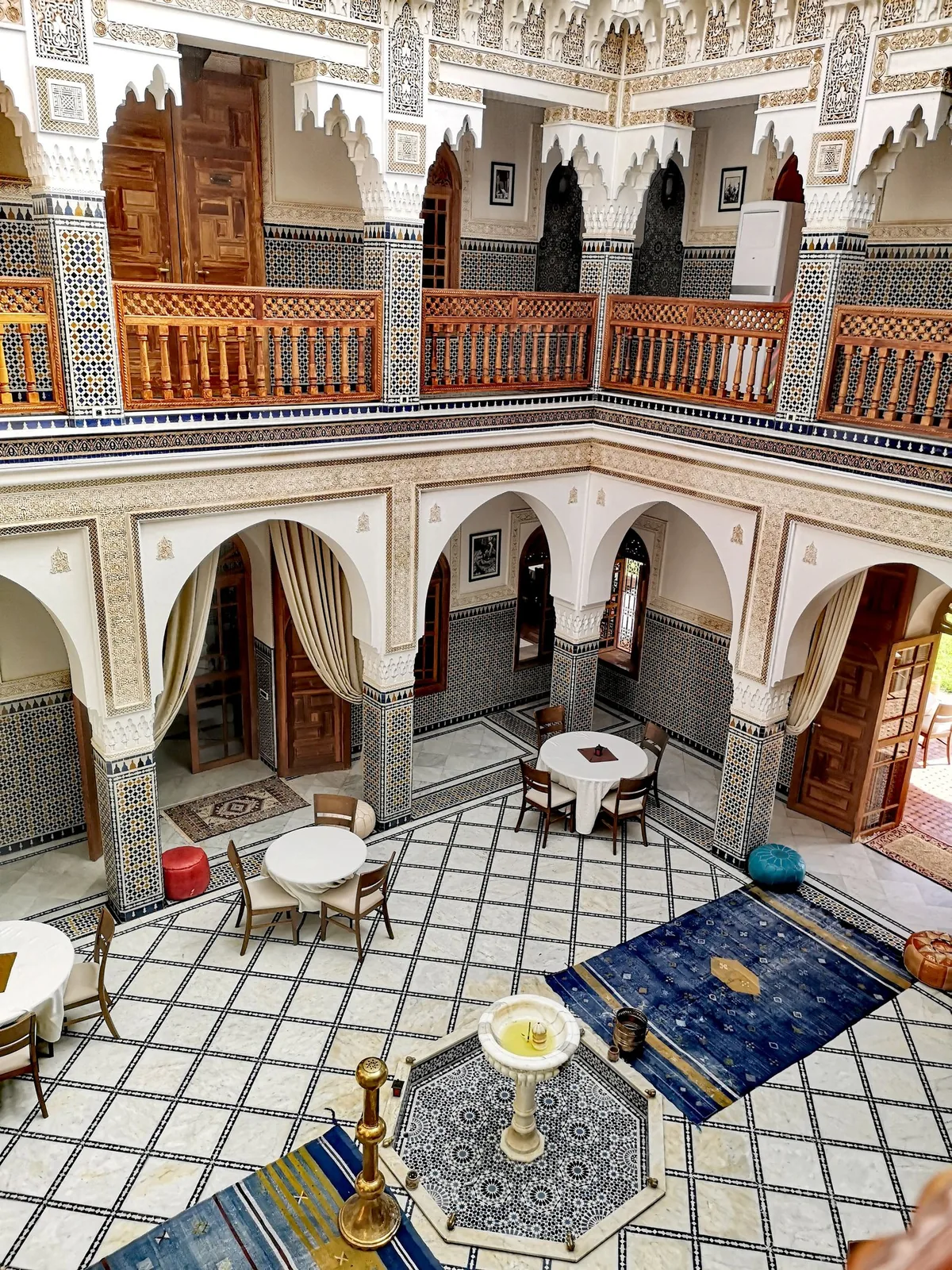
The great secret of dining in the old city is that the best rooms are invisible from the street. A Marrakech medina is a maze of blank walls and studded doors, and behind the plainest of them lie the riads — courtyard houses turned to jewel-boxes of tile, plaster and lantern-light, many with a kitchen and a rooftop that turn dinner into an event.
The courtyard is the classic setting. Dinner in a riad's central patio — orange trees, a trickling fountain, candles in the plasterwork niches, the sky a square of stars overhead — is as romantic as eating gets anywhere, and the food, cooked by a dada in the house kitchen, is often better than anything on a grander menu. These are small operations; book, and give your riad the afternoon's notice they ask for.
The rooftop is the other prize. Many medina houses serve their evening meal on the terrace, where the tables sit among the satellite dishes and the drying laundry of the old city with the Koutoubia lit gold in the distance. It is humbler and higher than the courtyard, and on a warm night it may be the best seat you find in Marrakech at any price.
Finding these places takes a little faith. The finest do not shout — no signage, no touts, sometimes not even a menu, just a door, a name and a recommendation passed quietly from one traveller to the next. Ask the people running your riad where they eat on their own night off; that answer, not any list, is how you find the medina's real tables.
And go with the medina's grain. Dinner here is unhurried and often set — a procession of salads, a tagine, fruit and tea, brought at the house's pace rather than yours. Surrender to it. Somewhere between the fifth little salad and the mint tea poured from on high, you will understand why people fall for this city and start plotting how soon they can come back.