Moroccan food is one of the world's great cuisines, and Marrakech is its glittering shop window. But the menus can bewilder the first-timer — a wall of unfamiliar names, sweet where you expected savoury, slow where you expected fast. A little knowledge turns that confusion into one of the best eating weeks of your life.
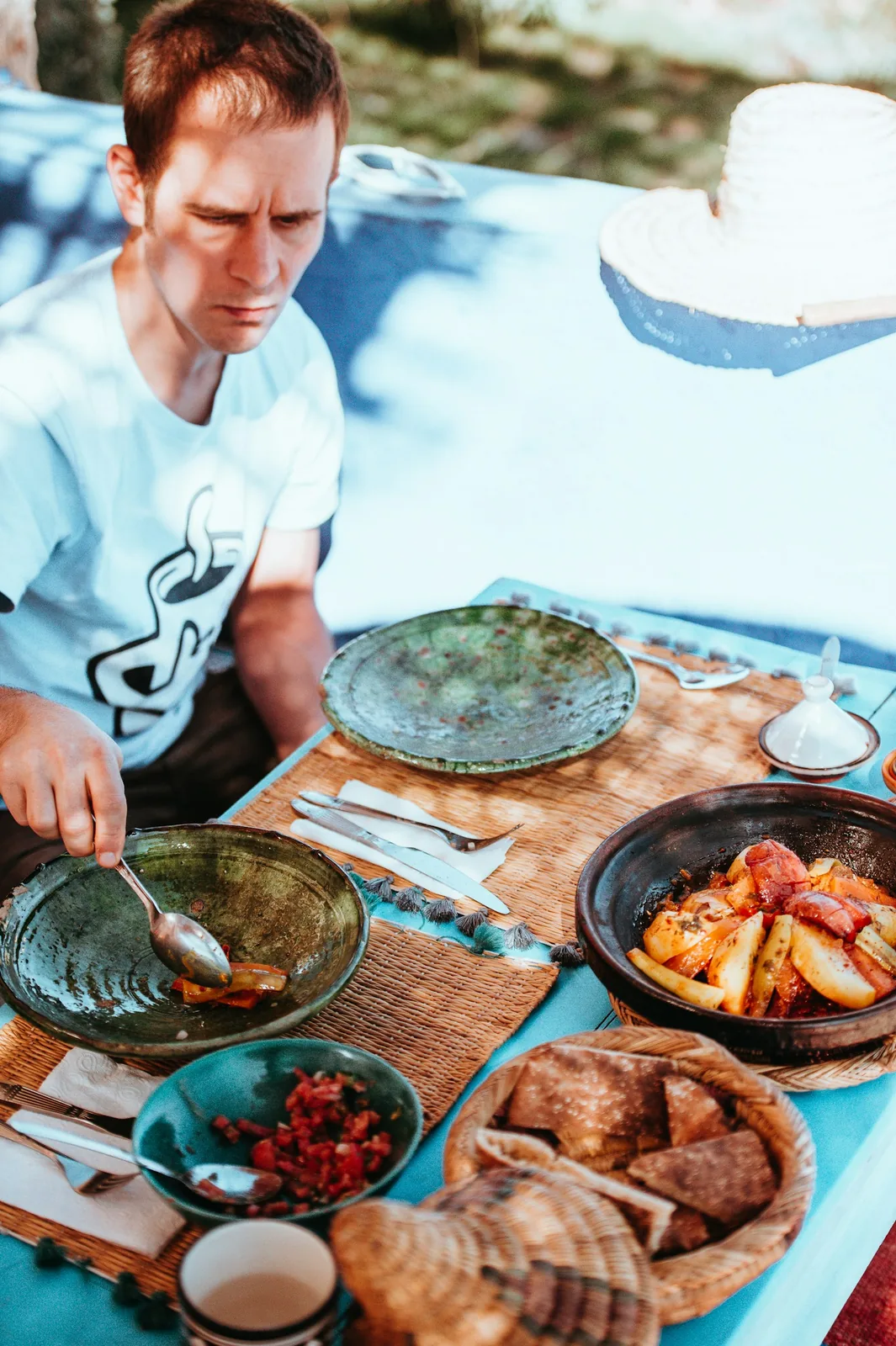
The tagine is the heart of it. Named for the conical clay pot it cooks in, it is less a dish than a method — meat or vegetables steamed slowly with spices, preserved lemon, olives, dried fruit, until everything melts together. Lamb with prunes, chicken with lemon and olive, kefta with egg: each region and each family has its own, and no two are quite alike. Order one the first night and you will understand the whole cuisine better for it.
Then the set pieces. Couscous, traditionally the Friday dish, arrives as a fragrant mound topped with seven vegetables and tender meat. Pastilla is the showstopper — a pie of pigeon or chicken layered with almonds and cinnamon and dusted with icing sugar, savoury and sweet at once, and utterly Moroccan. Harira, the thick tomato-and-lentil soup, breaks the fast in Ramadan and warms any cool evening.
The rituals matter as much as the recipes. Bread is the cutlery and the plate; mint tea, poured long and sweet from height, opens and closes everything; and a Moroccan meal is a slow, shared, generous affair in which the host's honour rides on your leaving too full to move. Lean into it — the pace is the point, and the second helping is not a suggestion.
Finally, the spice. Ras el hanout — 'top of the shop', a blend that can run to thirty spices — is the flavour you will chase after you leave, along with cumin, saffron, preserved lemon and the green punch of fresh coriander and mint. Buy a bag from a medina spice merchant to take home; it is the cheapest, most evocative souvenir Marrakech sells, and it keeps the trip alive on your own stove for months.